What Are Bed Bugs and How Do They Live?
Bed bugs are a type of insect that feeds on blood, and the reason we don’t see them is that they are most active at night. A bed bug’s main source of food is blood. Although they prefer to drink human blood, they will also drink blood from other warm-blooded mammals. After a bed bug consumes blood, it will crawl back to its hiding place, which is usually in bed tufts, cracks, and crevices.
Where Bed Bugs Hide in Your Home
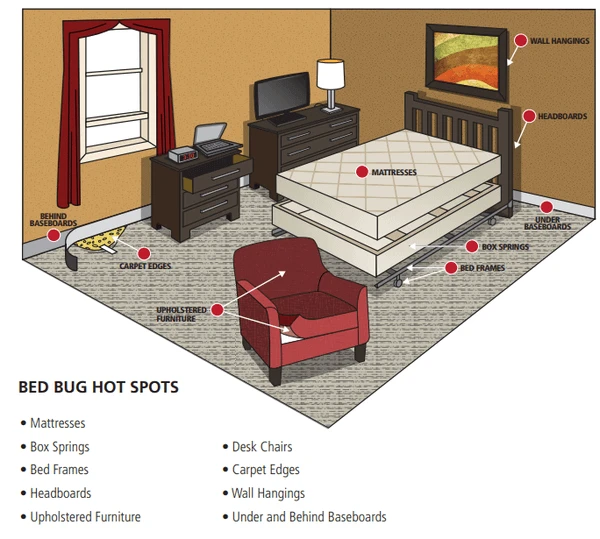
During the early stages of an infestation, bed bugs tend to be located in very close association with beds and/or upholstered furniture. As their population increases in age and size, they will be more likely to wander into unpredictable areas, and that’s how they spread to different parts.
The Bed Bug Life Cycle and Reproduction Rate
A mated female bed bug will lay two to five eggs a day and about 200 to 500 eggs in their lifetime. Each egg takes about ten days to hatch. So you do the math and can see how fast bed bugs can spread when it’s not controlled.
Understanding Bed Bug Treatment Basics
Regardless of what professional pest exterminators say about the different types of bed bugs requiring different treatment or how it’s difficult to get rid of bed bugs, the only important fact is that it’s the same method to eliminate all bed bugs.
Where to Inspect First for Bed Bugs
Here’s a basic illustration of where to check when you first start seeing bed bugs.
Choosing the Right Bed Bug Treatment Method
To treat bed bugs, it’s very simple but requires patience. No one knows your home better than you. Before treating for bed bugs, knowing where to inspect is important because you will need to focus on places that have bed bugs. When treating bed bugs, the most common methods are using insecticide dusts, insecticide aerosol, and liquid concentrates.
How to Use Insecticide Dusts Effectively
When using insecticide dusts, it’s important to pull back carpet from the baseboards and spot treat. Treat wall voids, behind light switches, and socket covers. Places where you see cracks and crevices, put some dust there.
How to Apply Bed Bug Aerosol Treatments
When using aerosol cans, it’s important to treat the furniture voids, behind picture frames, behind bed headboards, bed frames, carpeted surfaces, cracks, and crevices. Apply the aerosol as a surface spray to the mattress and box springs (for aerosols that are labeled for that type of use).
Using Liquid Concentrates for Bed Bug Control
Liquid concentrates are usually the most effective but the most troublesome because it requires you to mix the concentrate with water. When using liquid concentrates, it’s important to spot treat baseboards and floorboards with the liquid concentrates and use them as a surface spray on mattresses and box springs. Also, where you see harborage sites and their trail, it’s important to spray in those places too.